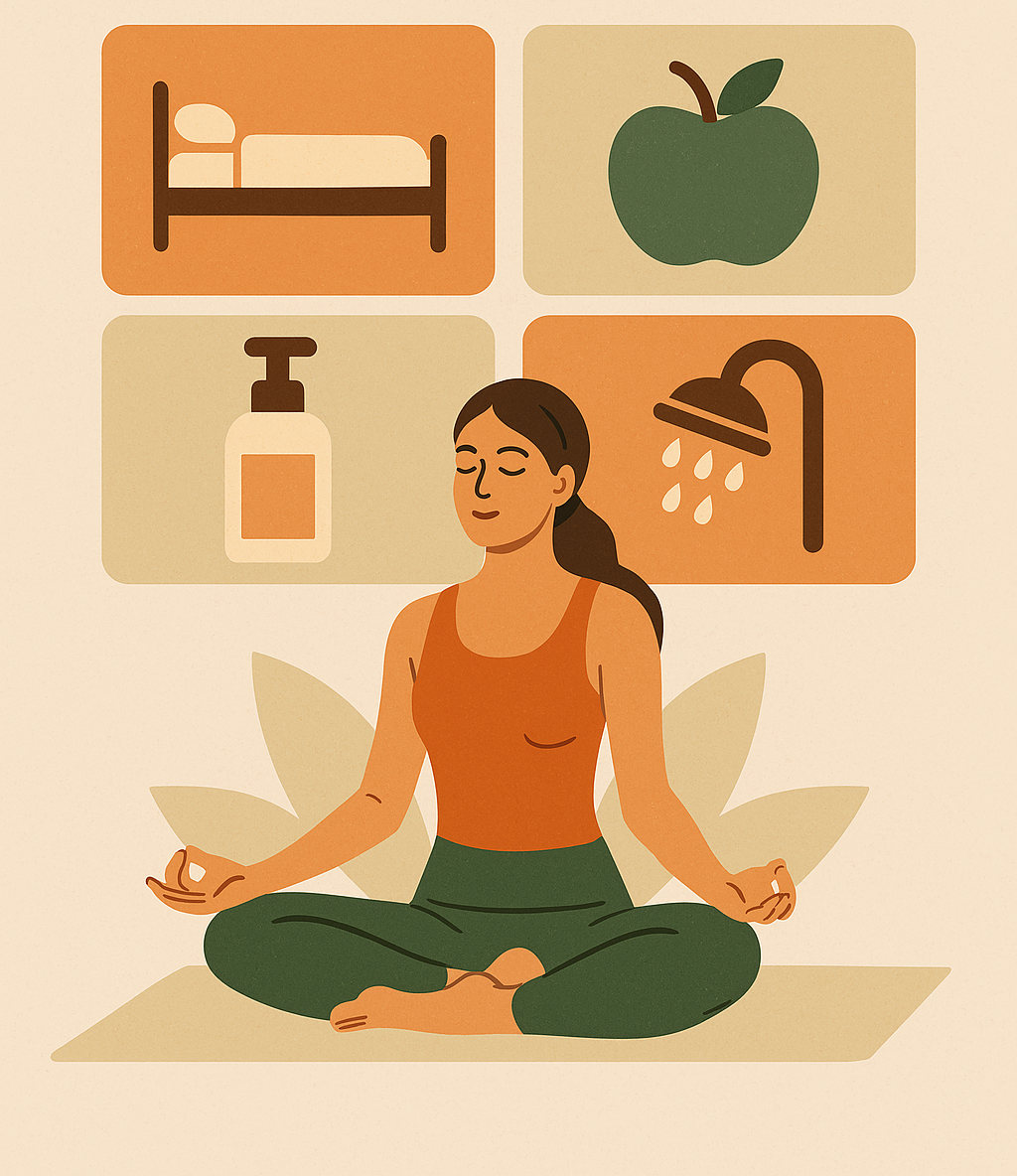


In Swasthavritta, Yoga and Lifestyle management are essential tools for maintaining health (Swasthya) and preventing disease. They are integrated to promote physical fitness, mental clarity, emotional balance, and spiritual well-being — in alignment with the Ayurvedic goal of holistic health.
Role of Yoga in Swasthavritta
Yoga, as mentioned in classical Ayurvedic texts, is a discipline that unites body, mind, and soul. Swasthavritta incorporates Yoga as a daily practice for:
- Maintaining Dosha balance
- Enhancing Agni (digestive fire)
- Promoting Ojas (vitality and immunity)
- Reducing mental stress and emotional disturbances
Select Yogic Practices in Swasthavritta
1. Asanas (Postures)
Promote flexibility, strength, and internal organ function:
| Dosha Type | Recommended Asanas |
|---|---|
| Vata | Vajrasana, Balasana, Tadasana, Shavasana |
| Pitta | Sheetali, Bhujangasana, Matsyasana |
| Kapha | Surya Namaskar, Trikonasana, Dhanurasana |
2. Pranayama (Breathing Techniques)
Regulates Prana (vital life force) and calms the mind:
- Anulom-Vilom – balances both hemispheres of the brain
- Bhramari – calms anxiety and improves focus
- Sheetali/Sheetkari – cools down excess Pitta
- Kapalabhati – energizes and clears Kapha-related sluggishness
3. Dhyana (Meditation)
Improves concentration, reduces stress, and supports mental hygiene:
- Practiced daily after asanas and pranayama
- Enhances emotional stability and spiritual growth